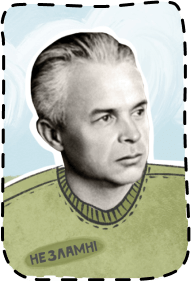
Dovzhenko’s tragic fate: he was banned from living in Ukraine, which he loved with all his heart. This is an example of how talented Ukrainians were treated in the USSR. Oleksandr Dovzhenko was unhappy for most of his life and died in poverty.
The family in which Oleksandr Dovzhenko was born is the most vivid illustration of the plight of the Ukrainian village in the late 19th and early 20th centuries. Out of 14 children in the family, only he and his sister Polina survived. Four brothers died on the same day from some kind of illness. And this is despite the fact that the family was not the poorest – life in the village was just extremely difficult.
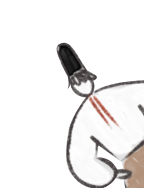
Oleksandr Petrovych began his career as an artist notably as a caricaturist.
Forced to live in Moscow, Oleksandr Dovzhenko missed Ukraine incredibly. “I will die in Moscow without ever seeing Ukraine,” he wrote in his diary in 1945, “Before I die, I will ask Stalin to take my heart out of my chest and bury it in my native land in Kyiv somewhere above the Dnipro River on a hill”.
The longing for his homeland killed him. Shortly before his death in 1956, he wrote to the presidium of the Writers’ Council of Ukraine: “I don’t need anything anymore – no film studio, no job, just help me move to Ukraine. I don’t need a big apartment. I just need at least one window to look out into the distance. I want to see the Dnipro River, the Desna somewhere below the horizon, and my native Chernihiv lands, which have been appearing so persistently in my dreams.” There was no answer. Dovzhenko was buried at the Novodevichy Cemetery in Moscow.