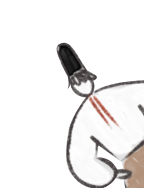
Vasyl Stefanyk, one of 1329 Ukrainian students, was enrolled in a Polish gymnasium in the late 1880s, where Polish and German were the only languages taught. He suffered from bullying because of his short height and rural background.
The writer wrote well, but not much. He had a hard time with his mother’s death – he retreated from literary work for fifteen years due to severe depression.
Stefanyk’s main activity was always politics. He was arrested in 1985 for exposing the anti-popular nature of state institutions. From 1908 until the fall of the Austro-Hungarian Empire in 1917, Stefanyk was a member of the Austrian Parliament from the Kingdom of Galicia and Volodymyriia, and defended the rights of peasants in western Ukraine.
In 1928, the Soviet government granted him a personal pension of 150 zloty per month (a loaf of bread cost 29 hryvnias at the time), but in 1933, during the artificially created Holodomor, he refused the money. Stefanyk distributed his pension from the Ukrainian Greek Catholic Church to beggars, asking them to pray for the Ukrainians who were starving to death.
The writer was seriously ill: in 1930, he suffered partial paralysis, frequent heart attacks, and pneumonia. In 1936, Vasyl Stefanyk died and was buried in his native village of Rusiv, Ivano-Frankivsk region.